
Every entrepreneur knows they have to "do the math." But too often, accounting is seen only as a tax obligation to be dealt with and filed away. This perspective, however, hides a gold mine for your growth. The key is to understand the difference between general accounting, which looks to the past for external obligations, and analytical accounting, which digs into the details to guide your future decisions.
This is not your typical academic textbook, but a practical guide to transforming accounting data into a real competitive advantage. We will show you how analytical and general accounting are not separate worlds, but two complementary lenses through which to observe the health of your company. You will see how modern analytics platforms, such as Electe, unify these two visions, offering you a complete picture. The goal? To provide you with the tools to understand not only how much you have earned, but above all where, how, and, most importantly, why.
This guide will help you:
You will learn how to transform numbers from simple records into strategic insights, a journey we explored in our in-depth analysis of the journey from raw data to useful information.
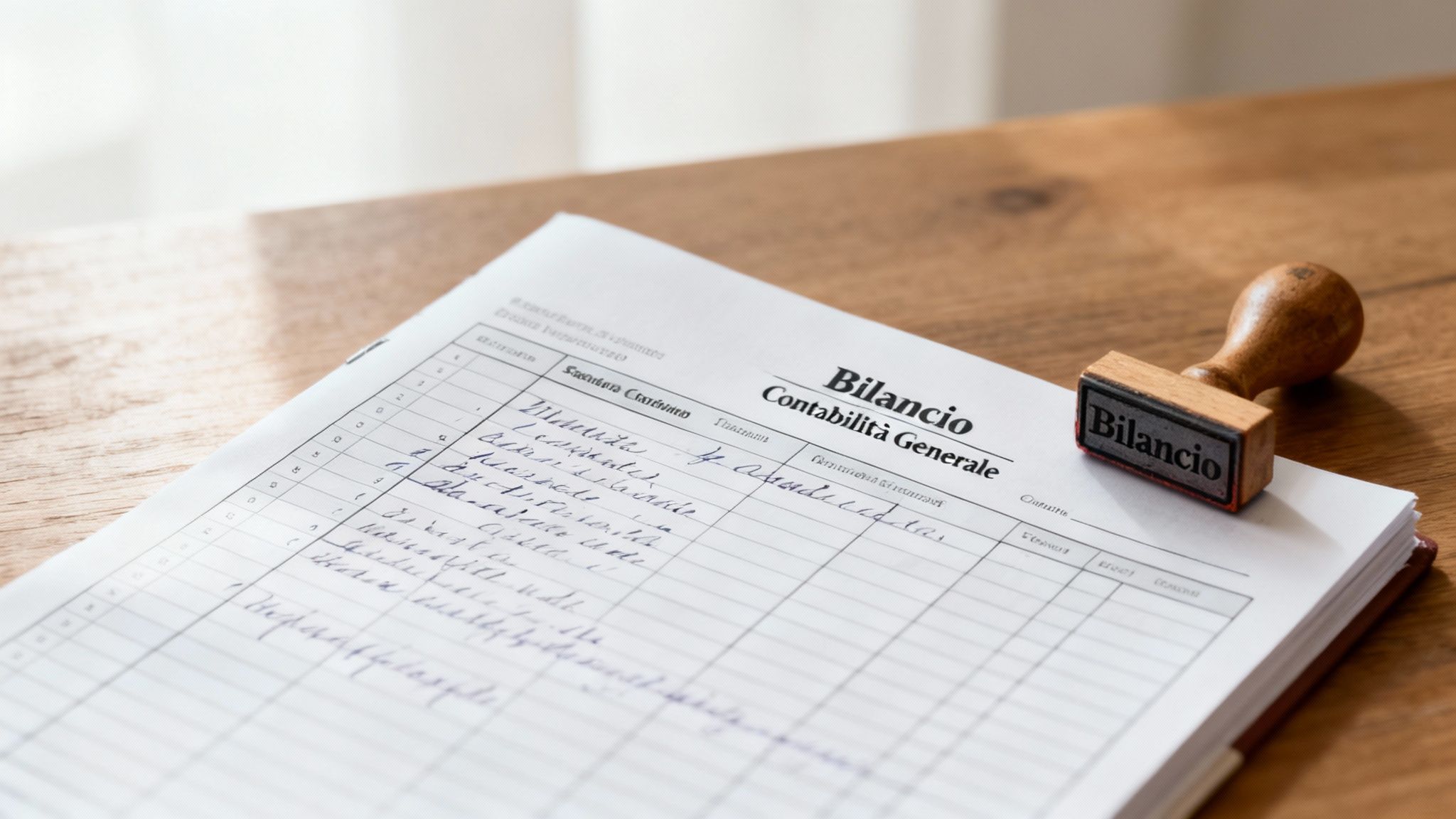
Think of general accounting (COGE) as your company's official identity card. Its purpose is to rigorously and chronologically record every transaction with the outside world: invoices issued, payments to suppliers, bank transactions. The ultimate goal is to draw up the financial statements, a formal document that complies with specific civil and tax regulations.
It is the calling card you present to banks, investors, and the tax authorities. Its structure, based on principles such as double-entry bookkeeping, provides a historical and aggregated view of results.
The budget is divided into three key documents:
General accounting answers a fundamental question: "What happened?" It provides you with an official snapshot of past performance, which is essential for communicating with external stakeholders.
However, its biggest limitation is that it tells you whether you ended the year in profit, but it doesn't tell you why. It doesn't show you which product generated the most margin or which order is causing you to lose money. For this, you need a more in-depth analysis.
General accounting is like a map showing the borders of a state. It is accurate and indispensable, but it will never tell you which restaurant offers the best value for money in a small town.
Today's SMEs cannot be satisfied with knowing only the final result. They must link the figures in their financial statements to their operational processes in order to understand where value is created. For an overview of the context, you can take a closer look at ISTAT's analysis of business data. General accounting is the starting point, but more is needed to make strategic decisions. To understand how to organize this data, see our article with an example of a business database.
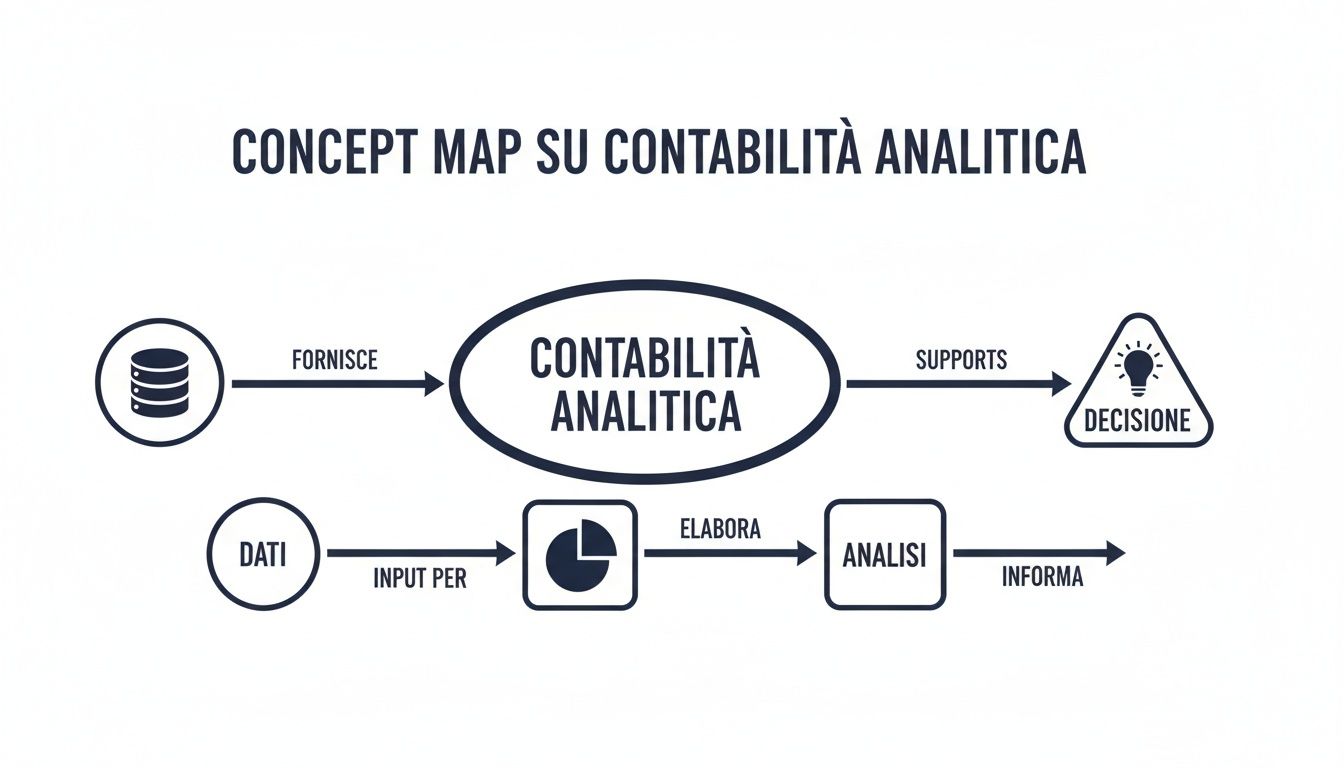
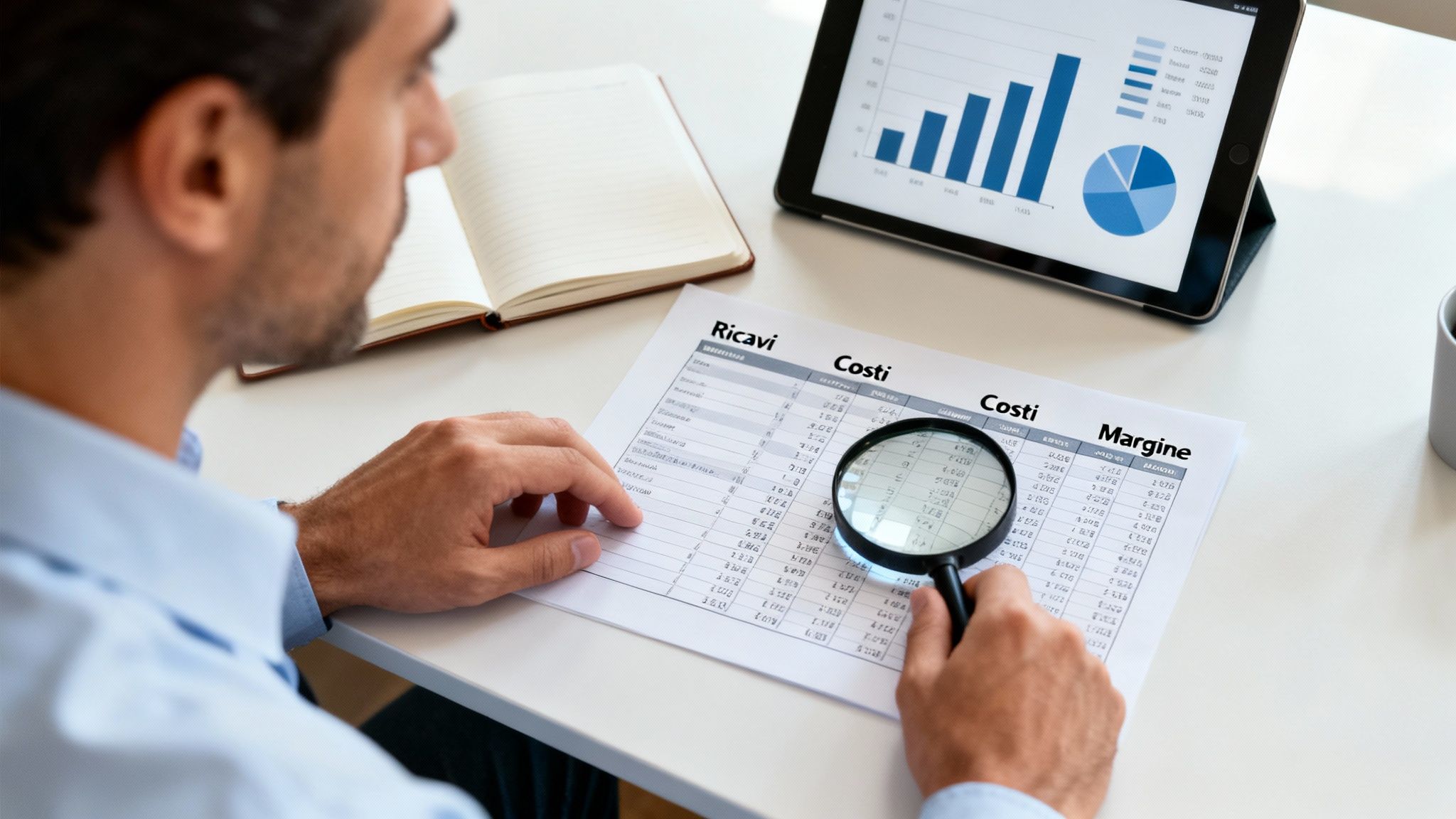
If general accounting is the map, cost accounting (COAN) is your business GPS. It doesn't look outward, but focuses on internal details. Its sole purpose is to guide you through day-to-day management so you can find the most profitable path.
It is purely a management tool, a control dashboard designed for decision-makers. It takes the big numbers from general accounting and breaks them down piece by piece to answer crucial questions:
To work, cost accounting reclassifies costs to understand not only "how much" you spent, but "how" and "why."
There are two key distinctions:
Unlike general accounting, analytical accounting is flexible. You can use different approaches, such as Direct Costing (which only attributes variable costs to calculate the contribution margin) or Full Costing (which also includes a portion of fixed costs). The choice of method can radically change the perception of profitability and guide important decisions, such as changing a price or abandoning a line of business.
In summary, analytical and general accounting are not rivals: they are allies. The former gives strategic meaning to the numbers that the latter, by law, must record. To find out how modern tools can automate these analyses, read our in-depth article on the best business intelligence software.
We have seen the two accounting systems as tools with different roles. Now let's compare them to understand why they need to work together to give you a 360° view of your business.
General accounting is mandatory, looks to the past, and is intended for external parties (banks, tax authorities). It presents summary data with specific deadlines, usually annual.
Analytical accounting, on the other hand, is not mandatory, is flexible, and looks to the future. It is used by internal management to make decisions, providing details that can be updated on a daily basis.
This table summarizes the fundamental differences between general and analytical accounting.
FeatureGeneral Accounting (COGE)Analytical Accounting (COAN)PurposeTo providean overview of assets and income for legal requirements.To analyze the profitability of products, customers, or departments to optimize resources.RecipientsExternal parties(banks, suppliers, partners, tax authorities).Internal management (entrepreneurs, executives, department managers).Time Horizon Mainlyhistorical. Records events that have already occurred (final balance). Future-oriented. Supports planning and decision-making (budget and final balance).Rules Rigidand codified by the Civil Code and accounting standards (OIC). Flexible and customizable according to the company's information needs.Detail Summary. Aggregates data into macro-items in the financial statements (e.g., "costs for services"). Granular and detailed. Breaks down data by cost centers, orders, products.
Understanding these differences is the first step toward bringing them into dialogue.
General accounting tells you whether you have made a profit. Analytics tells you exactly where you generated it and how you can make more tomorrow.
Until yesterday, linking general and analytical accounting was a manual, frustrating, and risky process, often relying on complex spreadsheets. This approach not only wasted precious hours, but also introduced a high margin of error, making analyses unreliable.
This is where artificial intelligence comes into play, changing the rules of the game.
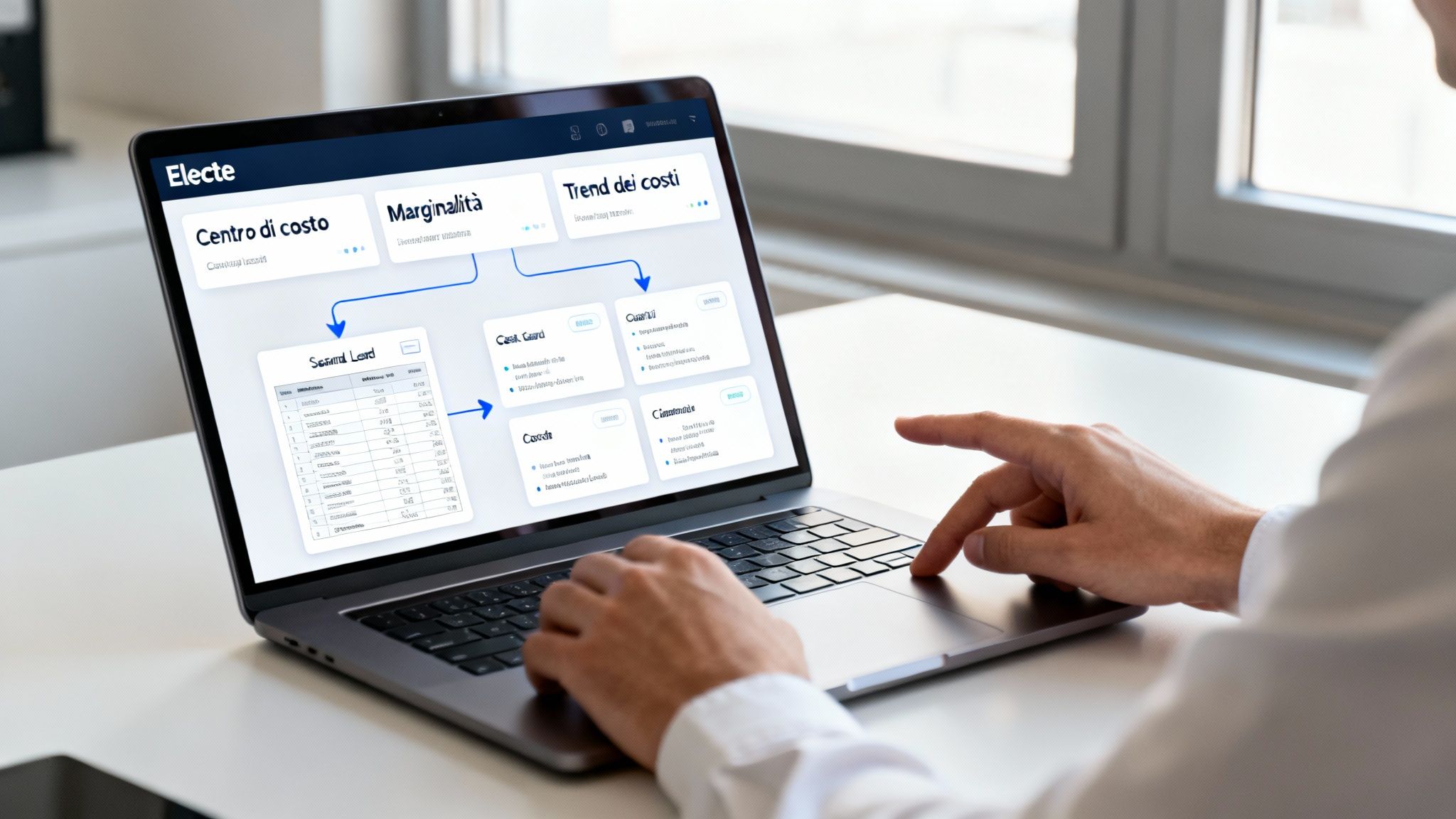
AI-powered data analytics platforms, such as Electe, build a dynamic bridge between the two accounting systems, transforming a task that used to take weeks into a process that takes just a few minutes.
The platform connects directly to your management system, extracting general accounting data. Then, thanks to machine learning algorithms, it breaks down the aggregate cost items and distributes them intelligently.
Instead of allocating costs manually according to fixed rules, AI analyzes operational data (machine hours, square meters, etc.) to find the most accurate cost drivers. The result is a precise and realistic allocation that eliminates approximations.
This means that analytical and general accounting are no longer separate worlds. They become a single, integrated, and interactive view of your business.
Imagine having a dashboard where, with a single click, you can switch from an overview of the income statement (for tax compliance) to the profitability sheet for a single product or customer (for strategic analysis).
With a unified dashboard, you can:
This agility transforms the way you make decisions. You no longer have to wait until the end of the month: you have answers in real time. In this way, accounting management ceases to be a retrospective exercise and becomes the driving force behind your growth strategy.
Moving from theory to action is essential. Here are three concrete steps to start leveraging the synergy between cost accounting and general accounting.
We have seen how general accounting provides you with your company's mandatory "report card," while cost accounting gives you the tools to improve future grades. The real revolution, however, is not choosing between the two, but unifying them.
Modern AI-powered data analytics platforms make this possible, transforming static accounting data into a dynamic navigation system for your business. Instead of just looking in the rearview mirror, you can finally focus on the road ahead, anticipating curves and accelerating toward your goals.
It is not just a matter of meeting tax deadlines, but of thoroughly understanding the mechanisms that generate profit, optimizing resources, and building a lasting competitive advantage.

.svg)


.svg)
.svg)




.png)