
Artificial intelligence is no longer science fiction, but a tool that thousands of small and medium-sized businesses use every day. Whether you use it to optimize inventory or tailor a marketing campaign, AI is opening doors that were once closed. But with great power comes great responsibility: the European AI Act is the EU’s guide to innovating safely and reliably.
This law isn’t an obstacle—it’s a roadmap to help you navigate the digital future. For your small business, understanding the rules of the game means turning a compliance requirement into a powerful competitive advantage.
In this guide, we will translate the requirements of the European AI Act into concrete actions. Together, we will explore:
Our goal is to give you the clarity you need to keep innovating without taking unnecessary risks. Understanding how Europe is approaching innovation is a crucial issue, as we also discussed in our in-depth analysis of the risk of technological irrelevance in Europe. Let’s get started.
Artificial intelligence has become an indispensable asset for anyone who wants to stay competitive. AI-powered analytics platforms, such as Electe, allow you to translate complex data into strategic decisions, streamlining processes that once consumed time and resources.
However, the widespread use of these technologies has raised important questions about security, privacy, and ethics. In response, the European Union has introduced the European AI Act, the world’s first comprehensive law regulating artificial intelligence.
You might think this legislation applies only to tech giants, but that’s not the case. The AI Act affects any company that develops, sells, or even just uses artificial intelligence systems within the EU. This includes your SME, which may already be using AI to:
This law is not intended to stifle innovation, but to build an ecosystem based on trust.
At the heart of the European AI Act is a risk-based approach, which we can think of as a traffic light system. The regulation starts from a sound premise: not all artificial intelligence systems are the same. Some systems pose concrete risks, while most of the tools used by SMEs—such as AI analytics platforms—have a low impact.
Understanding this classification is the first essential step in navigating the new requirements.
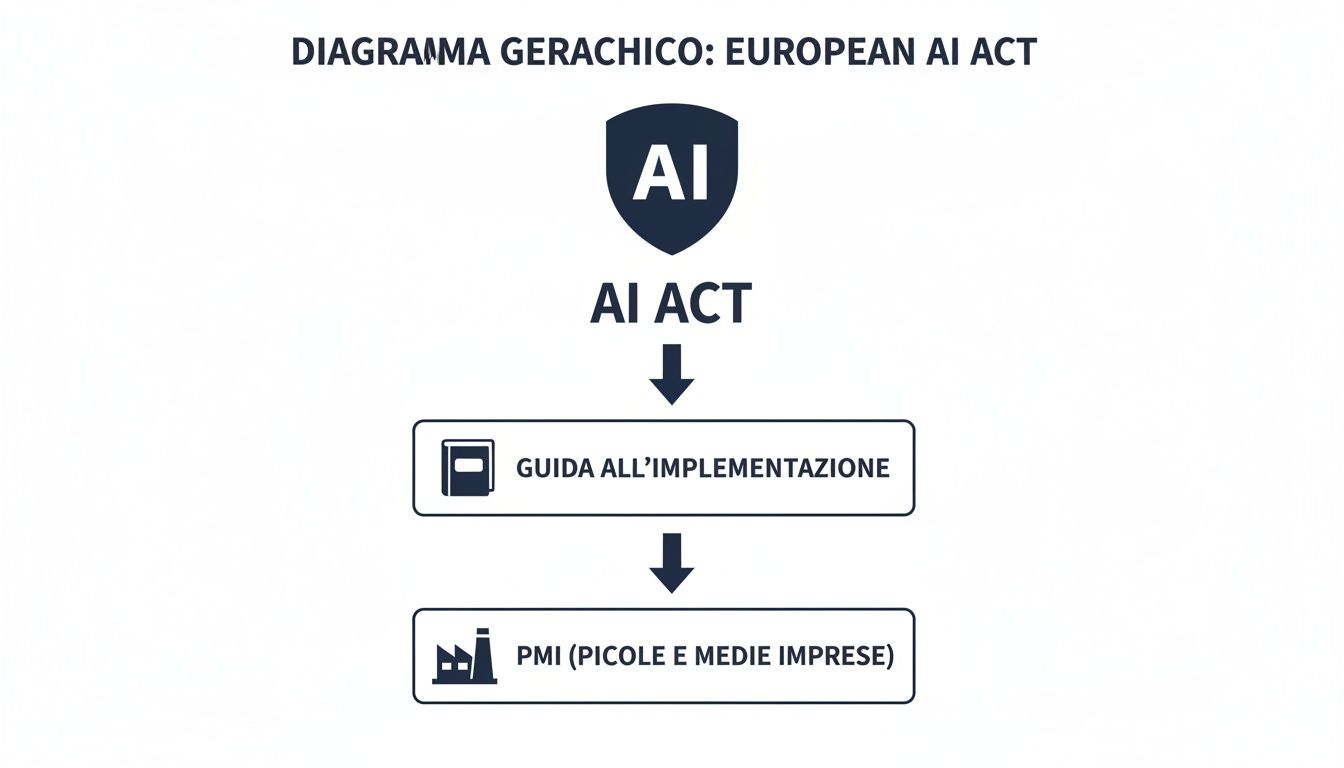
To clarify the traffic light system, here is a table summarizing the four risk categories.
This is the most serious category—a permanent "red light." It covers AI practices that the EU considers a threat to our values. These systems are prohibited. Examples include government social scoring and behavioral manipulation. For your SME, it is virtually impossible that you are using such a system, even unintentionally.
Here we enter the "yellow light" zone, where the utmost caution is required. High-risk systems are not prohibited, but they are subject to very strict requirements. This category covers AI systems whose errors could have serious consequences for health, safety, or fundamental rights.
Systems used in contexts such as the following are considered high-risk:
If your company uses a system that falls under this category, you need to make sure that the provider has followed all the rules: rigorous testing, thorough documentation, and human oversight.
This category is a "green light with a warning." Low-risk systems are permitted, but with one key requirement: transparency. Users must be clearly informed that they are interacting with an AI system.
The most common examples are:
For an SME that uses a chatbot, a simple notice is all that’s needed to comply with the regulations.
Here we are at the "green light." This is the broadest category, which includes most of the AI applications that SMEs use every day, such as AI analytics platforms.
These systems pose a very low risk. The European AI Act does not impose any specific requirements. This category includes:
Use a platform such as Electe to analyze sales falls squarely into this category. This allows you to harness the power of AI to grow your business, without having to worry about complex bureaucratic burdens.
Once you’ve mapped out your tools, the question naturally arises: who is responsible? The European AI Act distinguishes between two key roles: the provider (who creates the AI system) andthe user (who implements it in their business).
For most small and medium-sized businesses, the most common role will be that of a user. Understanding this distinction is essential, because it clearly defines your responsibilities.

The supplier is the starting point. It is the company that develops and markets the AI system. It bears the heaviest responsibilities, especially for high-risk systems. It must ensure conformity assessment, obtain CE marking, provide detailed technical documentation, and ensure robustness and cybersecurity.
For you, as a software buyer, this means peace of mind. Choosing a compliant vendor means relying on technology that has already been certified to meet rigorous standards.
Now it’s your turn. As a user, it’s your responsibility to ensure that the AI system is used properly. Even if the provider has done their part, the practical use of the tool is in your hands.
Your responsibility as a user is not to understand how the algorithm works, but to ensure that your use of it is appropriate, monitored, and transparent. Compliance is a shared commitment.
Here's what the European AI Act specifically requires of you:
Practical example: Is AI Analytics considered low-risk?Yes. A platform like Electe, used to analyze sales data, inventory, or marketing performance, falls into the low-risk category. It does not make critical decisions that impact people’s fundamental rights.
What should you do in any case? Even though there are no specific requirements, it’s good practice to document your assessment. In an internal log, note that you’ve analyzed the tool, classified it as “low risk,” and explained why. This demonstrates a proactive and responsible approach, protecting you in the event of an audit.
The European AI Act sets the stage, but it is up to individual Member States to define local rules. Italy is taking decisive action, not only to transpose European legislation but also to create a specific framework that complements it. Understanding this two-tier system—European and Italian—is essential for your SME.
Italy has taken the lead, distinguishing itself as one of the first countries to transpose European regulations into national law. Italian law establishes specific rules for strategic sectors and introduces new criminal offenses to combat the unlawful use of AI. For a more in-depth analysis, you can read this article on Italy’s pioneering AI law.
Two national supervisory authorities have been designated:
The Italian government has also established a strategic fund dedicated to artificial intelligence, managed by CDP Venture Capital. This is an exceptional opportunity for SMEs, as the fund also supports companies that adopt AI tools to improve their processes.
Italian legislation is not just a set of requirements, but also an ecosystem of opportunities. The AI fund is a sign that the government believes in innovation and wants to actively support you.
This means having access to incentives to implement concrete solutions. The goal is clear: to transform the adoption of AI from a cost into a strategic investment.
Understanding the Italian context gives you a twofold advantage: you know who to turn to for compliance, and you can take advantage of funding opportunities to grow your business. If you’d like to learn more, you can consult our comprehensive guide to the ethical implementation of artificial intelligence and discover more about the Italian approach by reading about the national strategy.
Let’s get down to business. Complying with the European AI Act is a manageable process if you take it one step at a time. Use this checklist as a starting point to begin your journey toward compliance.

The first step is awareness. Make a comprehensive list of every AI-powered platform, software, or feature you use. Consider every area of your business: marketing, administration, and customer service. Write down exactly what each tool does and what data it processes.
With your map in hand, use the traffic-light system to assign each tool a risk category: minimal, limited, high, or unacceptable. Spoiler: almost all of your tools will fall into the minimal-risk category. AI analytics platforms like Electe this category.
For high-risk or limited-risk tools, contact the vendor. Request documentation confirming their compliance with the European AI Act. A reputable vendor will provide you with all the necessary information regarding risk assessment, transparency, and security measures.
Documentation is everything. Create a simple log (even a spreadsheet) where you can note down:
Compliance is a shared responsibility. Make sure your team—especially those who use these tools every day—understands the basic principles of the regulations and company policies. Targeted training helps prevent misuse.
Even though a tool like Electe minimal risk, documenting your assessment demonstrates a proactive approach. It serves as proof that you have analyzed the regulations and acted accordingly.
The AI Act and the GDPR go hand in hand. For every AI tool that processes personal data, conduct a data protection impact assessment (DPIA). This helps you identify and mitigate privacy risks. If you’d like to see how privacy-by-design is at the heart of our solutions, read our in-depth article on the new version of our platform.
TheEuropean AI Act isn’t something to fear, but an opportunity to build a stronger, more reliable business. Here are 3 concrete steps you can take right away:
The European AI Act is not just a new regulation, but a guide to responsible innovation. For SMEs, understanding this legislation means turning a legal obligation into a competitive advantage by building trust with customers.
Compliance doesn’t have to be a lonely journey. Choosing technology partners who prioritize security and transparency—like Electe—makes the process much easier. Our AI-powered data analytics platform is designed to minimize risk, allowing you to focus on what matters most: growing your business with data-driven insights.
Are you ready to harness the power of data without any worries? With Electe, you can turn analytics into strategic decisions, with the peace of mind that comes from using a platform already aligned with the principles of the European AI Act.

.svg)


.svg)
.svg)